
When your business depends on forklifts to run, it’s essential
that you research your options when buying
new forklifts to add to your fleet. The differences between electric
and internal combustion lift trucks are plenty. For the same load capacity,
forklifts differ in three main ways.
Summary Of Differences Between Electric
Forklifts And Internal Combustion Lift Trucks
|
|
Usage |
Fueling & Refueling |
Maintenance |
|
Indoors |
1 Battery 8-Hr Charge Low Fueling |
Low |
|
|
Outdoors |
1 LPG tank < 5mins to High Fueling |
High |
1. Forklift Usage
One type of forklift is better than the other depending on
where you’re using it to move items.
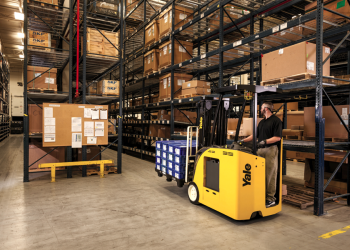
Are most of your material handling activities indoors? An electric forklift is best. Its compact build
means it’s easy to maneuver between aisles. And since it emits little to zero
emissions, an electric forklift is perfect for clean environments such as a
food processing area.
For handling materials outside, internal combustion (IC) lift trucks are
preferred. They are made to be waterproof and can run at full capacity, within
reasonable weather conditions. Internal combustion forklifts are known to emit
fumes. That’s why they’re more effective outdoors where you don’t need to
constantly ventilate the space.
2. Fueling & Refueling Your Forklift
Electric forklifts use a battery to power the
entire system. It can last anywhere between 5 to 8 hours based on how old the
battery is and how well maintained the lift truck is. When the battery is
drained, you have to charge it for 8 hours to restore it to full capacity.
When you need to use an electric forklift for more than one
shift, it’s helpful to have 2 or 3 batteries fully charged and on hand. Keep in
mind that it may take up to 45 mins to switch out the battery, and the charging
station may take up more space than you have in your facility.
That said, charging technology is advancing every day. You can
now charge faster, eliminating the need for multiple batteries and change-outs.
This also makes for a safer environment and reduces opportunity for workplace
injury.
Internal combustion lift trucks use fossil
fuels such as diesel, gasoline, and liquid propane gas (LPG) for power. One LPG
tank can last the entirety of an 8-hr shift. And refueling it takes less than 5
minutes. This means you can get back to moving more materials.
Overall, electric forklifts lead to lower hourly fuel costs
than internal combustion trucks. Charging batteries costs almost half as much
as LPG does on average.
3. Forklift Maintenance
Electric forklifts have lower maintenance
costs than internal combustion trucks. Electric forklifts
have less moving parts, which means less upkeep. The simplistic mechanical setup
as well as alternative AC motor technology leads to less repairs and reduced
fire hazards.
If your facility is not set up for the demands of regular
forklift maintenance – or if your business does not have the budget for it, you
are better positioned to add electric forklifts to your fleet.
Contact Us About Electric vs IC Forklifts In
Indiana
If you have more questions about electric and internal combustion
forklifts, our experts would be happy to answer them. We’ll help you assess the
material handling needs of your business, wherever you are in Indiana. Contact us to get more information on
forklifts today!